
1. The two names serve different purchasing tasks
Ingredient searches often begin with Dihydroavenanthramide D because that name appears in technical discussions and commercial catalogs. Cosmetic documentation, however, should be anchored to the standardized INCI name HYDROXYPHENYL PROPAMIDOBENZOIC ACID.
Using both names on a supplier page is useful only when their relationship is explicit. It helps procurement teams connect search language with the identity that should appear in specifications, safety files and formulation records.
| Field | Buyer-facing identity | How to use it |
|---|---|---|
| Standard INCI | HYDROXYPHENYL PROPAMIDOBENZOIC ACID | Primary identity for cosmetic-ingredient documentation and supplier qualification. |
| Commercial/common name | Dihydroavenanthramide D | Search, research and catalog cross-reference; not a substitute for the documented INCI. |
| CAS | 697235-49-7 | Substance cross-check; it does not by itself define concentration, vehicle, grade or salt form. |
| PINHONBIO® code | PH-SynBio 002 | Connects the offer, specification, sample and batch COA to the same commercial product. |
2. What should appear on a supplier COA?
A COA should be interpreted together with the current specification. For this ingredient, buyers should check the product code, INCI, commercial name, CAS, lot number, physical form, acceptance criterion, analytical method and actual batch result.
- Does the document identify PH-SynBio 002 or the exact offered supplier code?
- Does it state HYDROXYPHENYL PROPAMIDOBENZOIC ACID and CAS 697235-49-7?
- Is “99%” clearly connected to an HPLC method and a defined acceptance criterion?
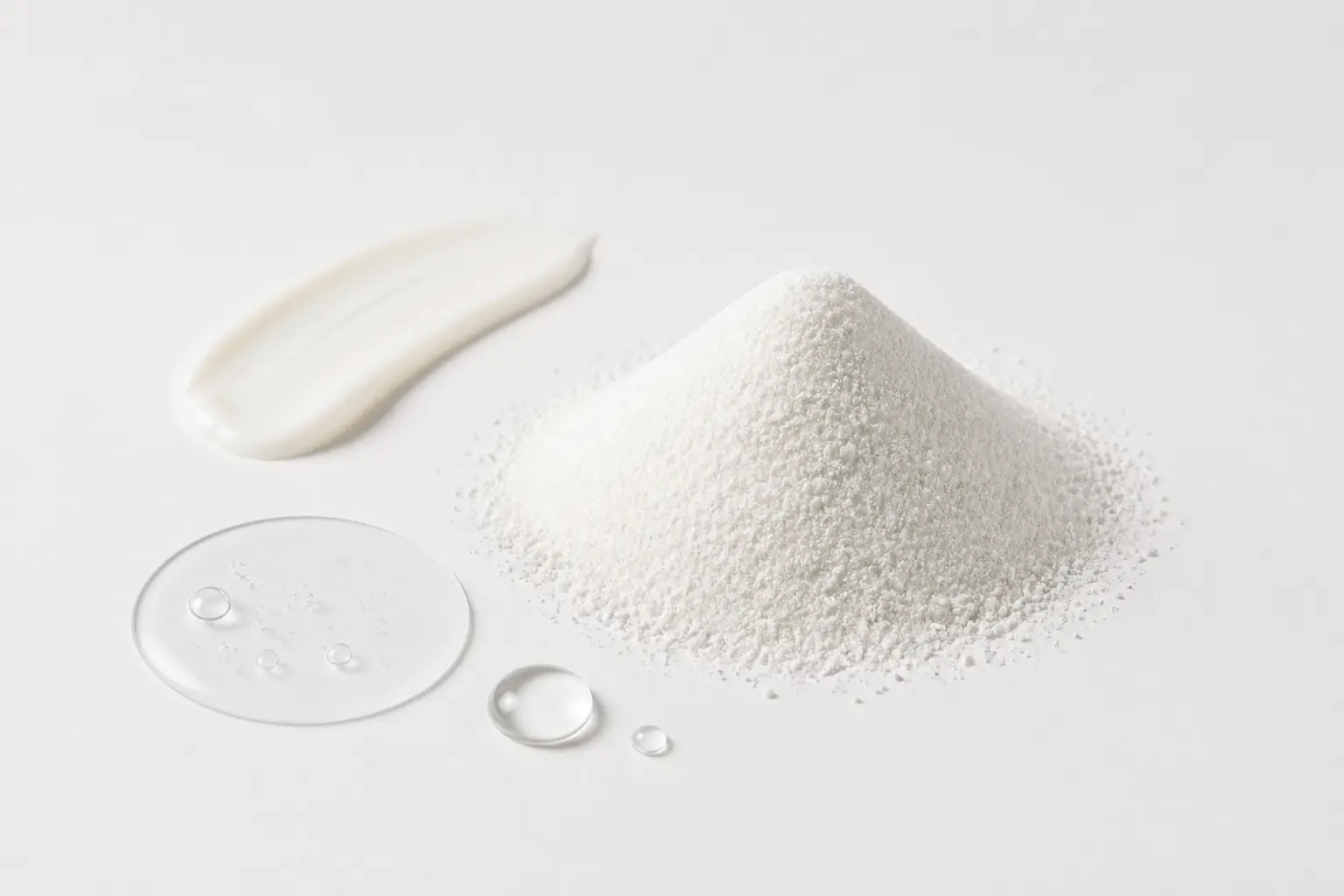
- Does the physical description match the offered commercial material?
- Is the COA issued for the batch that will actually be supplied?
3. Why 99% powder, solution and salt-form offers are not automatically equivalent
A percentage cannot be compared safely until the commercial format is identified. A high-grade powder may describe the ingredient itself. A solution includes a vehicle and may report either active content or total formulation composition. A salt form can represent a different chemical form with different identity and handling requirements.
The correct starting point is the finished-product system—not the highest number or the highest-priced option. Before selecting a form, define the dosage form, continuous phase, target pH, clarity requirement, processing route and stability target. Those conditions determine which candidate should enter compatibility testing.
| Commercial format | What must be confirmed | Comparison risk |
|---|---|---|
| 99% powder | Identity, appearance, HPLC criterion, calculation basis and batch result. | “99%” may not mean the same analytical quantity across suppliers. |
| Solution | Full INCI/composition, vehicle, active-content basis, concentration, pH where relevant and preservation system where applicable. | The solution percentage cannot be compared directly with powder purity. |
| Salt or other chemical form | Exact chemical/INCI name, CAS, counterion, molecular basis, specification and method. | Do not transfer the parent ingredient's CAS, solubility or specification without documentary evidence. |
PINHONBIO® separates the offers by commercial form. PH-SynBio 002 is the 99% neat white powder tested by HPLC. A solution can be prepared on request only after the active concentration and solvent system are agreed. PH-XPNS 002 is a separate ≥99% water-soluble monosodium salt powder. PINHONBIO® does not offer a disodium salt grade.
These forms must not be compared by percentage alone. Match the product code, chemical form, active-content basis, solvent or carrier composition, handling instructions, current specification and corresponding batch COA before formulation trials.
4. A practical supplier-document sequence
- Identity screen: match INCI, commercial name, CAS and supplier product code.
- Commercial-format screen: distinguish powder from a formulated solution or another chemical form.
- Specification review: verify grade, physical description, test method and acceptance limits.
- Safety and handling review: obtain the SDS for the exact commercial material.
- Batch acceptance: match the supplied lot to its batch COA.
- Formulation review: use the current TDS and project testing for solubility, addition, compatibility and stability decisions.
PINHONBIO® supplies commercial-grade Hydroxyphenyl Propamidobenzoic Acid under product code PH-SynBio 002. Buyers can request the current TDS, specification, SDS, corresponding batch COA, sample and project-specific supporting-file review.
5. Frequently asked questions
Are Hydroxyphenyl Propamidobenzoic Acid and Dihydroavenanthramide D the same ingredient?
Yes. Authoritative substance records connect Dihydroavenanthramide D with Hydroxyphenyl Propamidobenzoic Acid. The first is a common commercial and research name; the second is the standardized INCI and procurement identity.
Which INCI name should a cosmetic ingredient buyer use?
Use HYDROXYPHENYL PROPAMIDOBENZOIC ACID in the supplier specification, safety and cosmetic-ingredient documentation. Dihydroavenanthramide D can be recorded as the commercial or common name to support search and cross-reference checks.
Do both names use CAS 697235-49-7?
The authoritative identity sources reviewed for this guide connect both names with CAS 697235-49-7. A buyer should still match the CAS with the exact commercial format, product code, specification and batch documents.
Is a 99% powder equivalent to a solution or salt form?
No. A powder, solution and salt form can differ in active-content basis, vehicle, composition, chemical form and analytical method. Treat each as a separate commercial material until the supplier documents establish equivalence.
Which documents should a supplier provide?
For initial qualification, request the current TDS, specification and SDS. For supplied material, match the batch COA to the product code, INCI, CAS, form, grade and analytical method. Request composition and project-specific supporting files when evaluating a solution or another chemical form.
Which Dihydroavenanthramide D forms does PINHONBIO® supply?
PH-SynBio 002 is the 99% HPLC neat white powder. A solution can be prepared on request after its active concentration and solvent system are agreed. PH-XPNS 002 is a separate ≥99% water-soluble monosodium salt powder. PINHONBIO® does not offer a disodium salt grade.
Identity sources and product path
- FDA/NCATS Global Substance Registration System identity record
- NCATS substance record for Hydroxyphenyl Propamidobenzoic Acid
- ChemSpider chemical identity record
- PINHONBIO® PH-SynBio 002 99% neat powder
- PINHONBIO® PH-XPNS 002 monosodium salt powder
- PINHONBIO® quality and analytical support
External sources are cited for nomenclature and identity mapping. PINHONBIO® commercial-grade statements come from the current product record and must be matched to the applicable specification and batch COA.