Chlorogenic Acid — 5%
- Assay
- 5%
- Product Identity / INCI
- EUCOMMIA ULMOIDES LEAF EXTRACT
- Botanical Source
- Eucommia ulmoides
- Plant Part
- Leaf
- Appearance
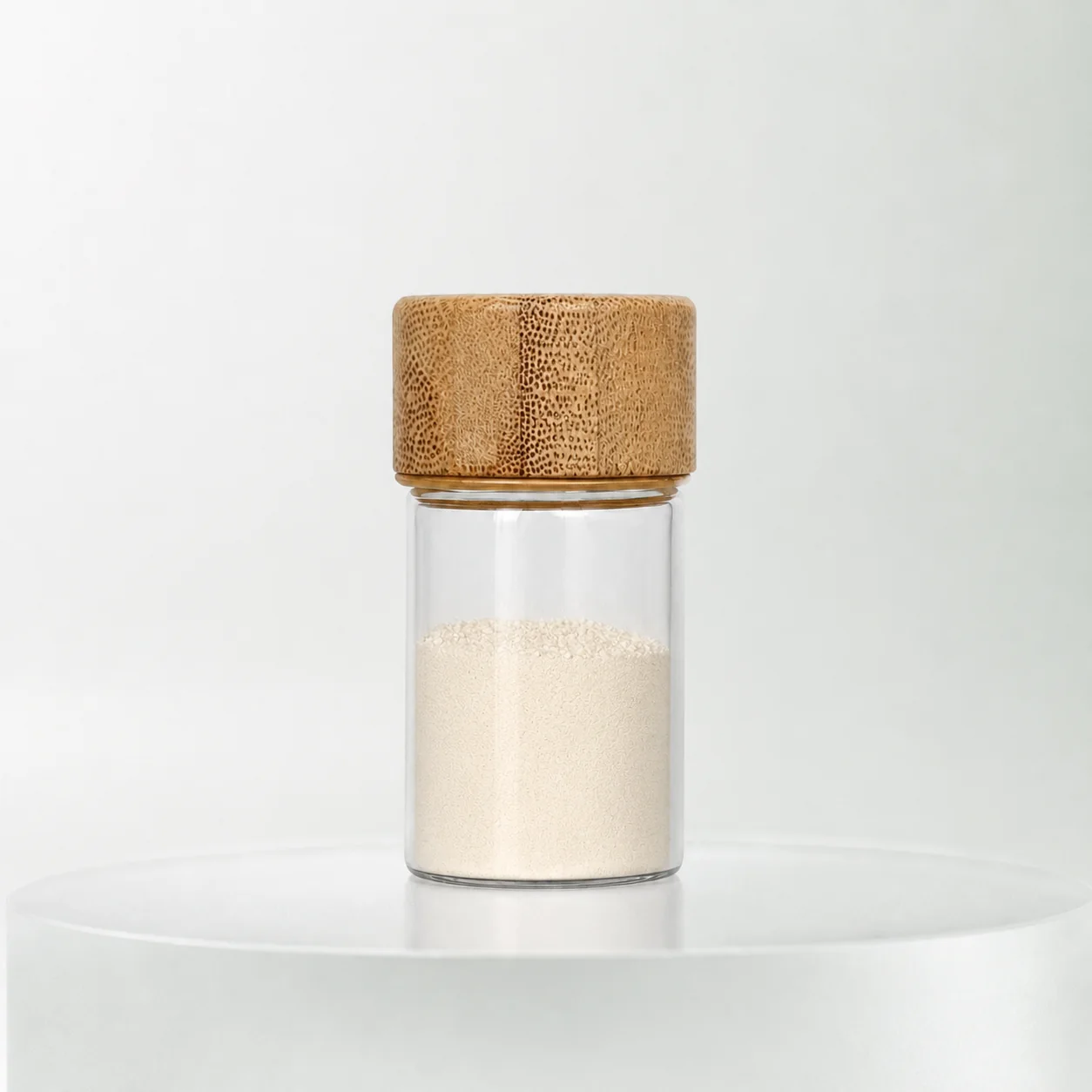
- Brownish-yellow powder
- Solubility
- Water-soluble
- Added Carrier
- None
- Test
- HPLC
PH-NP 014 · PRODUCT DATA
High-Purity ≥98% Water-Soluble Grades for Cosmetic and Topical Formulation Development
≥98% options · Eucommia leaf or Honeysuckle flower
High-purity ≥98% Chlorogenic Acid grades are available for cosmetic and topical formulation development, with Eucommia leaf-derived and Honeysuckle flower-derived options. PINHONBIO® also lists 5% and 25% grades, allowing buyers to compare active content, source and appearance against the needs of their formulation. The product information lists water solubility.
For gel, ointment-type and other topical systems, begin with the target purity, aqueous-phase conditions and finished-product color. The ≥98% options are listed as white powders, while the 5% and 25% options are brownish-yellow powders. Published topical-delivery research provides formulation context, but performance must be validated in the customer's own system. Share the preferred source, required quantity and development format when requesting PH-NP 014. Ask PINHONBIO® to confirm current commercial supply, sample availability and lead time for the selected grade; these depend on the current offer and order requirements.
This page describes ingredient identity, specification and technical review points. It does not establish a finished-product efficacy or regulatory claim.
QUICK ANSWER
High-purity ≥98% Chlorogenic Acid grades are available for cosmetic and topical formulation development, with Eucommia leaf-derived and Honeysuckle flower-derived options. PINHONBIO® also lists 5% and 25% grades, allowing buyers to compare active content, source and appearance against the needs of their formulation. The product information lists water solubility.
FORMULATION FOCUS
Evaluate Chlorogenic Acid in gels, ointment-type formulations and other topical systems with an appropriate vehicle. Water solubility is relevant to aqueous-phase work, but does not establish compatibility with every ointment base.
Published research has evaluated Chlorogenic Acid in topical delivery and ointment-type systems. Research on delivery vehicles informs development choices; finished-product performance must be validated in the customer's own formulation.
Original study: topical vehicles and ex vivo skin penetration
FORMULATION FOCUS
The ≥98% grades offer Eucommia leaf-derived and Honeysuckle flower-derived options. Compare the source declaration, HPLC specification and white-powder appearance for the grade you intend to purchase. The 5% and 25% options remain available for grade comparison.
Confirm purity, source, color, dissolution and stability in the target system. Include pH, processing, packaging and active-content retention in development. Request a current quotation and sample availability for the selected source rather than assuming permanent stock.
IDENTITY & PROPERTIES
Product name, code, grade, label and batch documents should point to the same material. This is the foundation for technical, quality and purchasing review.
The two ≥98% natural Chlorogenic Acid grades have the same chemical identity and purity but separate botanical origins and COA traceability.
GRADE SELECTION
The grades shown here are the currently available commercial options. Final requirements and acceptance criteria are defined in the applicable specification and purchase agreement.
| Grade | Source / property | Appearance | Formulation positioning |
|---|---|---|---|
| 5% | Confirm selected-grade source | Brownish-yellow powder | Water-soluble grade |
| 25% | Confirm selected-grade source | Brownish-yellow powder | Water-soluble grade |
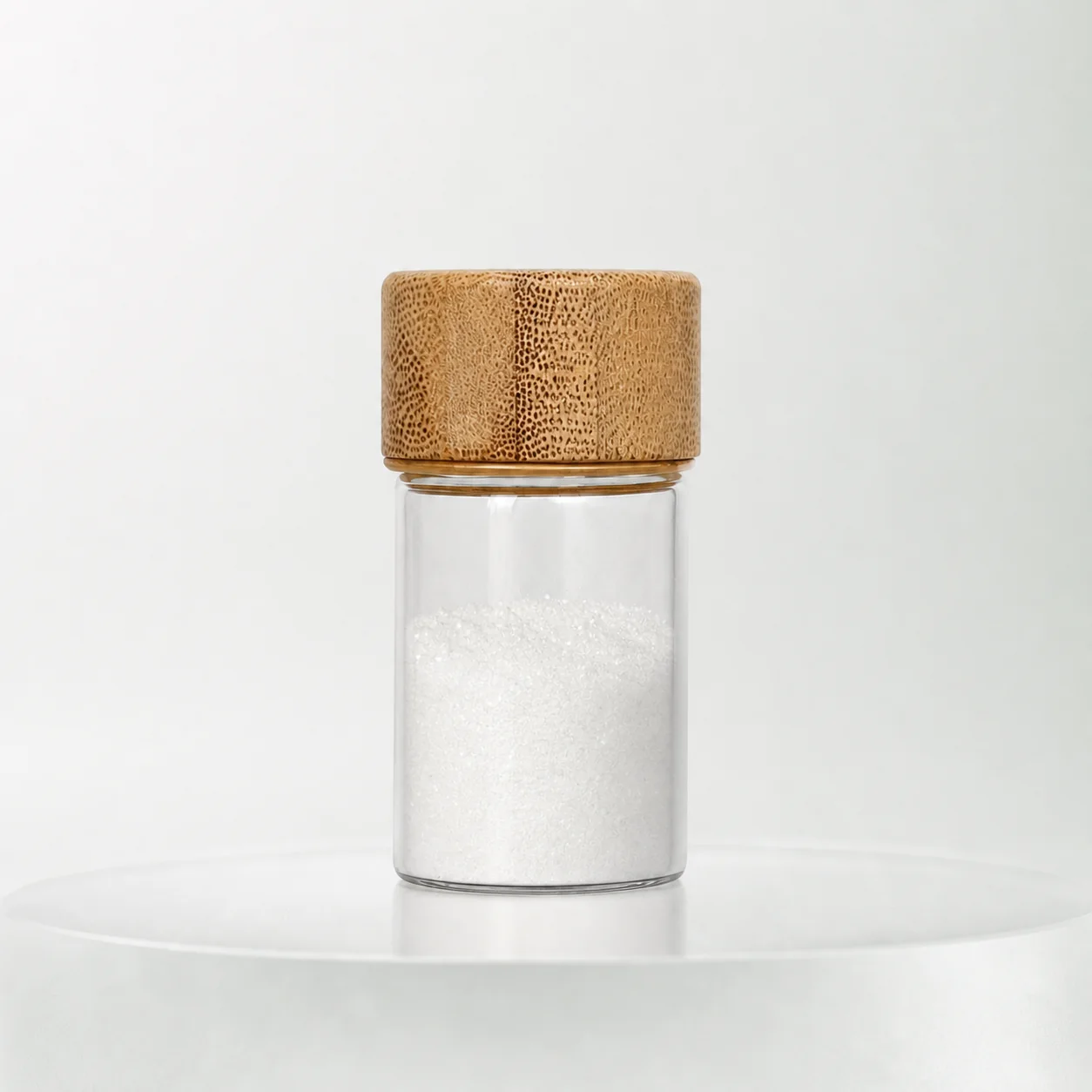
| ≥98% | Eucommia leaf-derived | White powder | High-purity topical development |
| ≥98% | Honeysuckle flower-derived | White powder | High-purity topical development |
| Review item | Listed requirement | Method or evidence |
|---|---|---|
| Listed grade | 5% / 25% / ≥98% — Eucommia leaf-derived / ≥98% — Honeysuckle flower-derived | HPLC |
| Appearance | Brownish-yellow powder / Brownish-yellow powder / White powder / White powder | Visual inspection or current specification |
| Solubility | Water-soluble | Current product document |
| Product identity | PH-NP 014 / Chlorogenic Acid | Label, specification and batch documents |
LEAF-DERIVED ≥98% TECHNICAL DATA
Technical summary for the supplied ≥98% leaf-derived material only. INCI: CHLOROGENIC ACIDS. Extraction solvents: water and ethanol. The source document identifies the plant part as leaf but does not name the botanical species; confirm source matching before selecting this specification. These limits do not apply automatically to the 5%, 25% or flower-derived grades.
| Item | Specification | Method listed in supplied COA |
|---|---|---|
| Chlorogenic acid content | ≥98% | HPLC |
| Appearance | Off-white powder | Visual |
| Odor | Characteristic | Organoleptic |
| Identification | Color reaction | TLC |
| Loss on drying (5 h at 105°C) | ≤5% | GB/T 5009.3-2003 |
| Ash content | ≤5% | GB/T 5009.34-2003 |
| Particle size | ≥98% passes 80 mesh | 80-mesh screen |
| Heavy metals (as Pb) | ≤10 ppm | GB/T 5009.74-2003 |
| Arsenic (As) | ≤1 ppm | GB/T 5009.11-2003 |
| Lead (Pb) | ≤1 ppm | GB/T 5009.12-2010 |
| Cadmium (Cd) | ≤1 ppm | GB/T 5009.15-2014 |
| Mercury (Hg) | ≤0.5 ppm | GB/T 5009.17-2003 |
| Total plate count | <1000 cfu/g | GB/T 4789.2-2003 |
| Total yeast & mould | <100 cfu/g | GB/T 4789.15-2003 |
| Coliforms | Negative | GB/T 4789.3-2003 |
| Salmonella | Negative | GB/T 4789.4-2003 |
| Staphylococcus aureus | Negative | GB/T 4789.10-2003 |
Packing: 25 kg per drum with two inner plastic bags. Store in a well-closed container at ambient temperature, protected from moisture and direct sunlight. Confirm shelf life in the current grade documentation; no general shelf-life duration is specified in this summary.
Specifications are separate from batch results. Extraction solvents do not establish finished-ingredient solubility or residual-solvent limits. Analytical method references are transcribed from the supplied COA.
View / print ≥98% leaf-derived technical data →COMPOSITION & ACTIVE CONTENT
For a defined molecule, active content is normally expressed through identity and assay. For an extract or multi-component ingredient, marker content, carrier and composition need to be reviewed together.
The listed assay or grade must not be interpreted as a finished-product efficacy claim. For extracts, request confirmation of the plant identity, plant part, marker definition, carrier and extraction information where applicable.
QUALITY & REGULATORY SUPPORT
Availability and applicability vary by ingredient, grade, batch and intended market. A document being available does not by itself establish finished-product compliance.
Review the product code, grade, test method, current Specification and corresponding batch COA together.
Request applicable microbiology, heavy metals, residual solvents, pesticides or other risk-based controls for the selected ingredient.
IECIC, REACH, TSCA and other inventory or notification questions are confirmed for the specific material and destination market upon request.
Vegan, GMO, allergen, animal-testing and related declarations are supplied only when supported by the applicable product file.
Review PINHONBIO® analytical capabilities, testing scope and third-party verification approach →
DOCUMENTATION
Once the grade is confirmed, we can provide the applicable TDS, specification, SDS, batch COA and supporting test reports.
Confirm Specification & Request Documents →PACKAGING
1 kg per bag or 25 kg per drum. Final pack and label details follow the confirmed order.
STORAGE
Store sealed in a cool, dry place and protect from light. Shelf life and conditions follow the current label, TDS and SDS.
BEFORE ORDERING
Confirm the grade, quantity, destination market, product format, required documents, lead time and acceptance terms in writing.
INGREDIENT Q&A
These answers explain the published data and its limitations. Use current official documents and written confirmation for project decisions.
Browse all ingredient questions & answers →Published research has evaluated Chlorogenic Acid in topical vehicles, including ointment-type systems. It can be considered for formulation development, with the vehicle, stability and finished-product performance validated by the customer.
The listed Chlorogenic Acid grades are described as water-soluble, including the ≥98% options. Confirm dissolution at the intended concentration, pH and temperature; no quantitative solubility limit is stated here.
Both options are listed at ≥98%, with white-powder appearance and HPLC testing. Their declared botanical sources differ: Eucommia leaf versus Honeysuckle flower. Compare the corresponding source and batch documentation; no performance superiority is implied.
Check the PH-NP 014 code, product name, INCI or chemical identity, selected grade, packaging label and corresponding batch COA together.
Available grades are 5%, 25% and ≥98%. The ≥98% options are offered from Eucommia leaf or Honeysuckle flower; both are listed as white powders tested by HPLC.
The listed grades are water-soluble, including the ≥98% Eucommia-leaf and Honeysuckle-flower options. Screen dissolution at the intended concentration, pH and temperature, then check colour, clarity and storage stability. Botanical source and assay grade should remain identified when comparing samples.
Available files may include the current TDS, Specification, SDS and a COA for the corresponding Chlorogenic Acid batch. Additional regulatory or testing files depend on the selected grade and project scope.
Send PINHONBIO® the product code PH-NP 014, required grade, quantity, destination market and intended formulation format. Sample availability, quotation terms and documents are then confirmed in writing.
PH-NP 015
PH-NP 016
PH-NP 017
PH-NP 018
PROJECT REQUEST
Request a quotation, sample or current technical documents. Include the destination market and formulation conditions when available.