Anti-wrinkle and fine-line care
Evaluate Acmella extract in anti-wrinkle serums or creams using a defined endpoint and a matched finished-formula control. Ingredient research does not establish a clinical result for your finished product.
PH-XPNS 003 · Product Data
5% & 10% Spilanthol
PINHONBIO® manufactures and supplies Acmella Oleracea Extract in 5% and 10% Spilanthol specifications. Both the 5% and 10% grades are tested by HPLC. Select the required grade for documents, samples and quotations.
The 5% grade is a pale-yellow oily liquid and is the material used in the supplied eye cream reference. The 10% grade is pale yellow and is also available in DMI or GTCC/MCT. Request its own specification and batch documents.
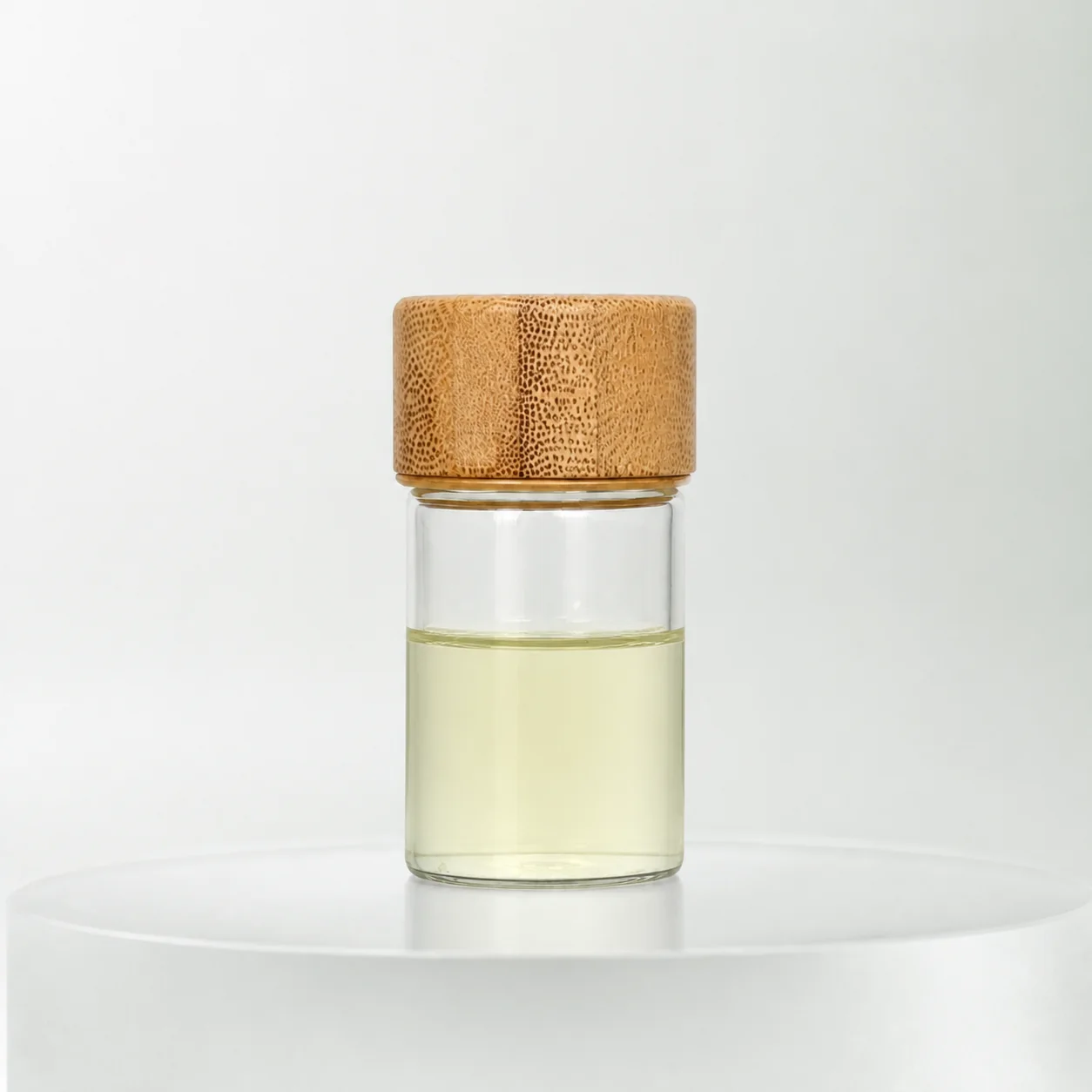
PH-XPNS 003 covers two Spilanthol specifications: 5% and 10%. Match the selected grade to its own material documentation; the 5% grade data do not establish the properties of the 10% grade.
For inquiries using the terms Spilanthes Acmella Extract or Paracress Extract, specify the required botanical identity and the required 5% or 10% Spilanthol content. Similar commercial names alone do not establish identical composition.
Match the current specification to the corresponding batch COA before comparing offers or starting a formulation study.
| Extract specification | Carrier | Assay / appearance | Technical documents | Sample request |
|---|---|---|---|---|
| 5% DMI | DMI (Dimethyl Isosorbide) | 5% Spilanthol by HPLC; pale-yellow oily liquid | TDS · SDS | Request 5% DMI sample |
| 5% GTCC/MCT | GTCC/MCT (Caprylic/Capric Triglyceride) | 5% Spilanthol by HPLC; pale-yellow oily liquid | TDS · SDS | Request 5% GTCC/MCT sample |
| 10% | DMI (Dimethyl Isosorbide) or GTCC/MCT (Caprylic/Capric Triglyceride) | 10% Spilanthol by HPLC; pale yellow. Request the 10% grade’s own technical documents. | Request 10% documents | Request 10% DMI sample Request 10% GTCC/MCT sample |
Free samples of 5–10 g are available for both grades. Freight is confirmed separately before dispatch.
The 5% DMI and GTCC/MCT files cover their named preparations only. The 10% grade also uses HPLC, but its own technical documents are not yet available for download. The 5% files do not replace the 10% files. For samples, specify PH-XPNS 003, the selected specification and carrier.
Evaluate Acmella extract in anti-wrinkle serums or creams using a defined endpoint and a matched finished-formula control. Ingredient research does not establish a clinical result for your finished product.
The supplied eye cream prototype provides a concrete starting reference for this 5% extract. Validate the complete formula for the intended eye-area exposure, compatibility and safety.
Include the extract in a facial-care development brief alongside texture, stability and the intended appearance-related performance measurements. Substantiate firming or aging-related claims on the final formulation.
The original eye cream phase table below is reproduced from the existing formulation library. It lists Acmella Oleracea Extract (5%) in phase B2 at 2–5% of the formula. This is the amount of that 5% extract preparation in this particular reference, not a general recommended use level.
Under that explicit assumption, 2–5% material × 5% marker content contributes 0.10–0.25% nominal Spilanthol. This arithmetic does not define a use level for high-purity Spilanthol.
B2 is the documented phase assignment. The reference does not supply a validated Acmella addition temperature, a complete manufacturing sequence or a universal pH range. The water-heating instruction shown in A3 belongs to that water entry. Confirm the full ingredient declaration and carrier system, then evaluate dispersion, processing, preservation and stability in your actual base.
The eye cream reference does not define a use level for the 10% grade or high-purity Spilanthol.
| Phase | Material | Amount (%) |
|---|---|---|
| A1 | FB04 | 3 |
| A1 | FB03 | 5 |
| A1 | FB02 | 3 |
| A1 | EUK134 | 0.05 |
| A2 | Sodium Hyaluronate | 0.15 |
| A2 | Water | 10 |
| A3 | Caffeine | 1 |
| A3 | F106 | 0.2 |
| A3 | Hydroxypropyl Tetrahydropyrantriol | 6 |
| A3 | Z-AIO-16 | 0.5 |
| A3 | Water (heated to 60°C) | q.s. to 100 (approx. 30.25–33.25) |
| A4 | Magnesium Sulfate | 1.2 |
| A4 | Disodium EDTA | 0.05 |
| A4 | Water | 8.45 |
| A4 | PE9010 | 0.45 |
| B1 | FA05 | 3 |
| B1 | FA07 | 4 |
| B1 | FA20 | 5 |
| B1 | Beeswax (100# grade) | 7 |
| B1 | FS16 | 2.5 |
| B2 | Jojoba Oil | 3 |
| B2 | Acmella Oleracea Extract (5%) | 2–5 |
| B2 | Trans-4-tert-Butylcyclohexanol | 0.3 |
| B2 | F203 | 0.3 |
| B2 | Bisabolol | 0.5 |
| B3 | Fragrance (Citrus) | 0.1 |
10% Spilanthol · HPLC — DMI or GTCC/MCT. The 10% technical files will be added later; the 5% files above do not cover the 10% grade.
Request 10% documentsProduct identity and acceptance criteria for the selected grade
Request SpecificationResults and conclusions for the corresponding supplied batch
Request COARequest the current specification and batch COA for the 5% extract, together with the applicable TDS and SDS. Compare the HPLC assay against the stated marker specification and ask about chromatogram availability where needed for your qualification file.
Set any additional contaminant, microbiological or destination-market documentation requirements for this exact preparation. Product-specific limits and declarations should come from its supporting file.
The 10% extract is available in DMI and GTCC/MCT preparations, is pale yellow and is tested by HPLC. Request its own technical documents for the complete ingredient declaration and handling conditions.
Request a sample for your own formula evaluation and identify PH-XPNS 003, the selected 5% or 10% specification, the carrier (DMI or GTCC/MCT for either specification), quantity and destination. Store sealed and protected from light, following the current label and material documents.
The 10% extract is available in DMI and GTCC/MCT preparations, is pale yellow and is tested by HPLC. Request its own technical documents for the complete ingredient declaration and handling conditions.
PINHONBIO
Commercial packs are available in 1 kg, 5 kg, 10 kg and 25 kg sizes.
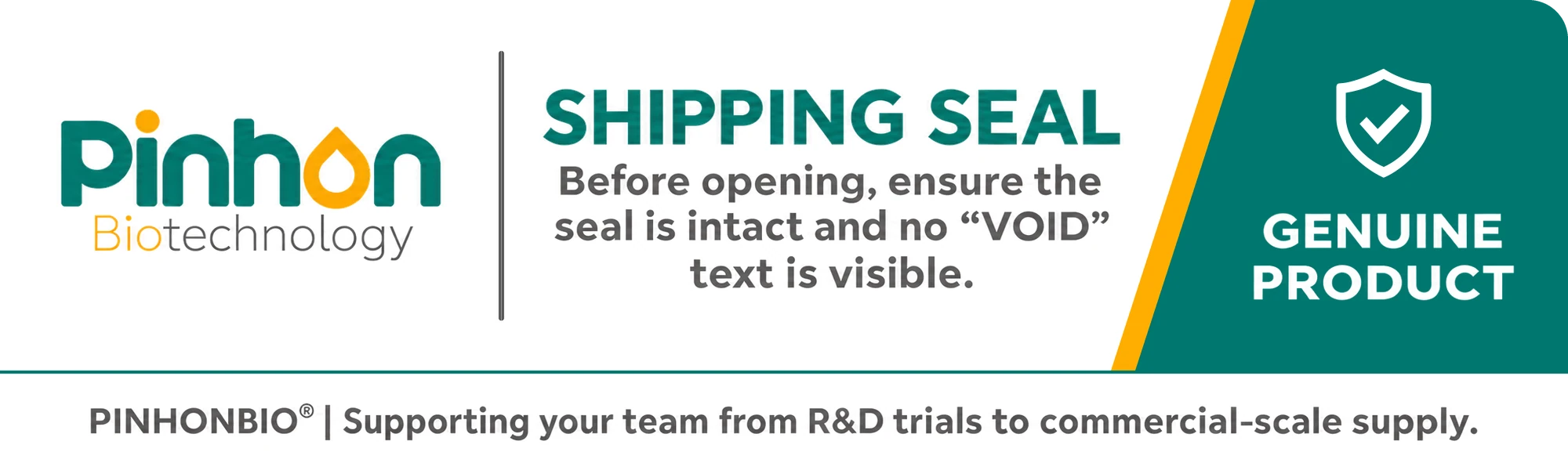
Check the seal before opening your carton. It should be intact, with no “VOID” text visible.
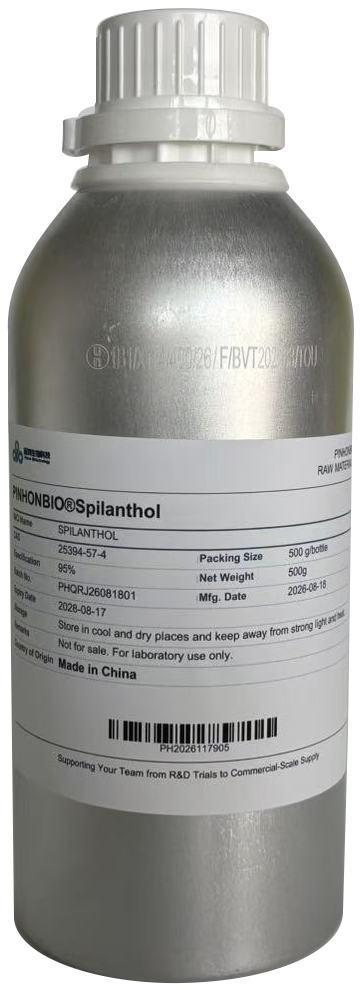 Screw cap
Product barcode
The 1 kg aluminum bottle has a screw cap and a product barcode.

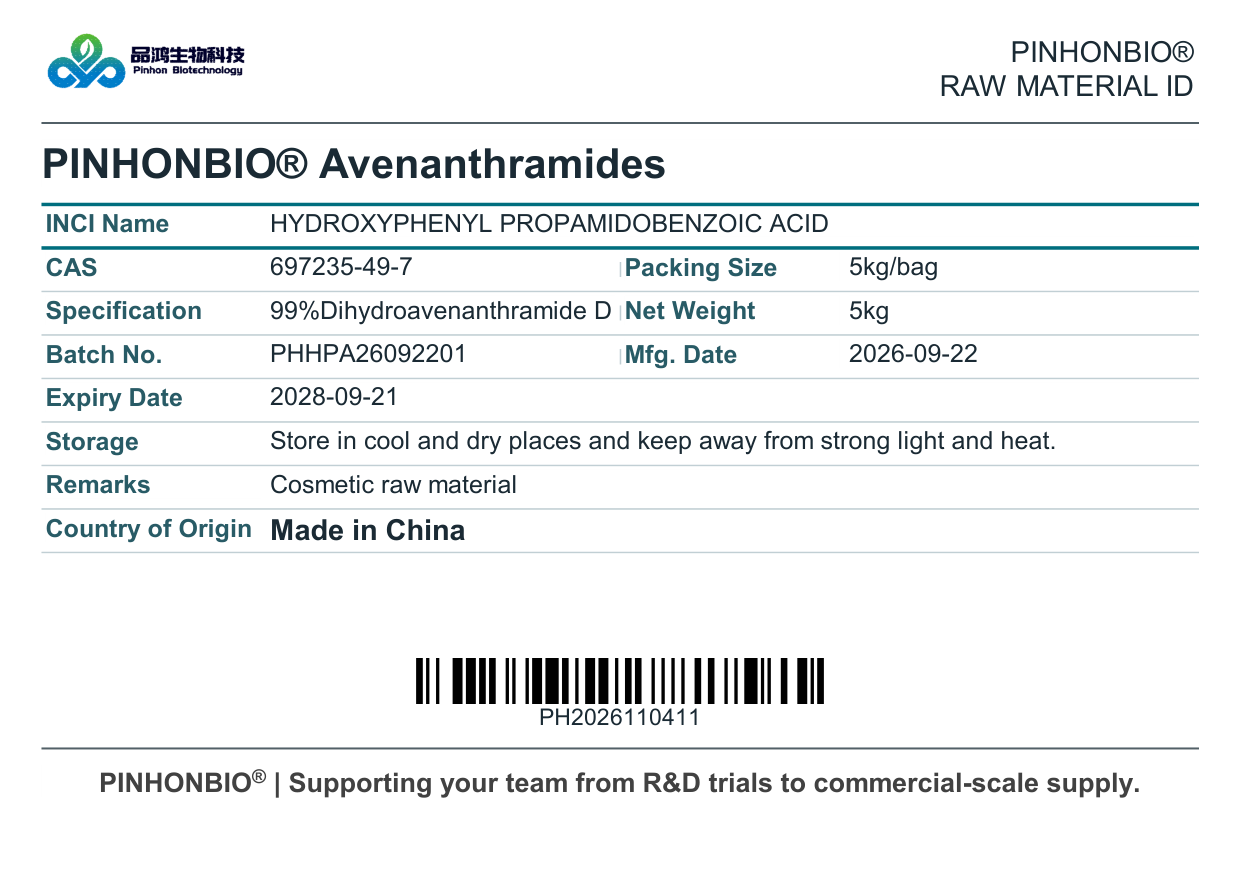
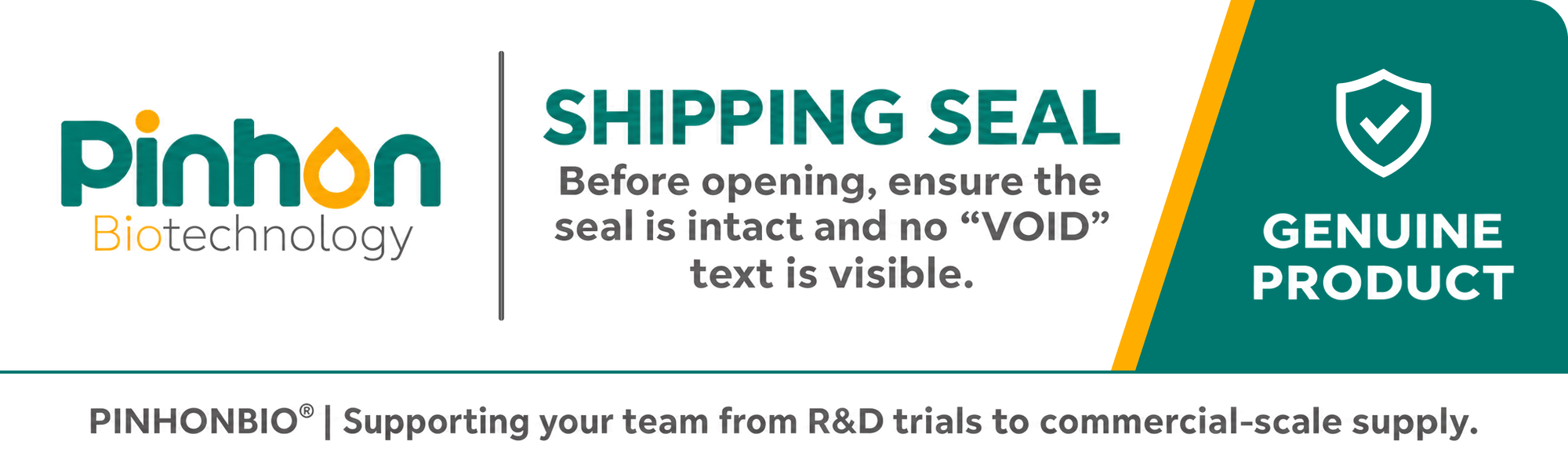
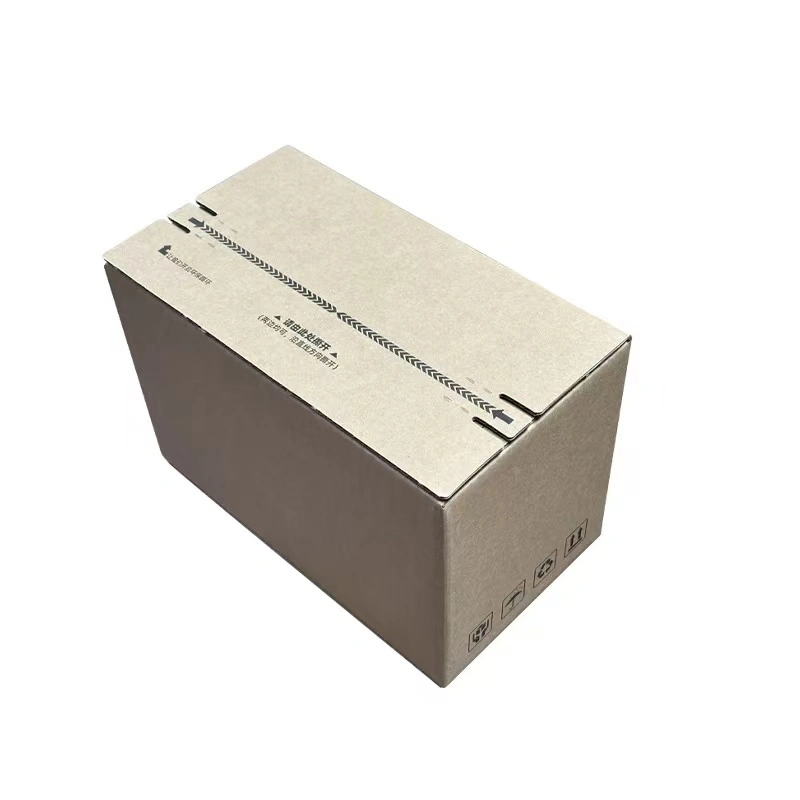
30 × 36 × 36 cm. The illustration shows a 10.5 × 7.5 cm product label and a 3 × 10 cm tamper-evident seal across the lid seam.
 Tamper-evident authenticity sealBatch traceability code
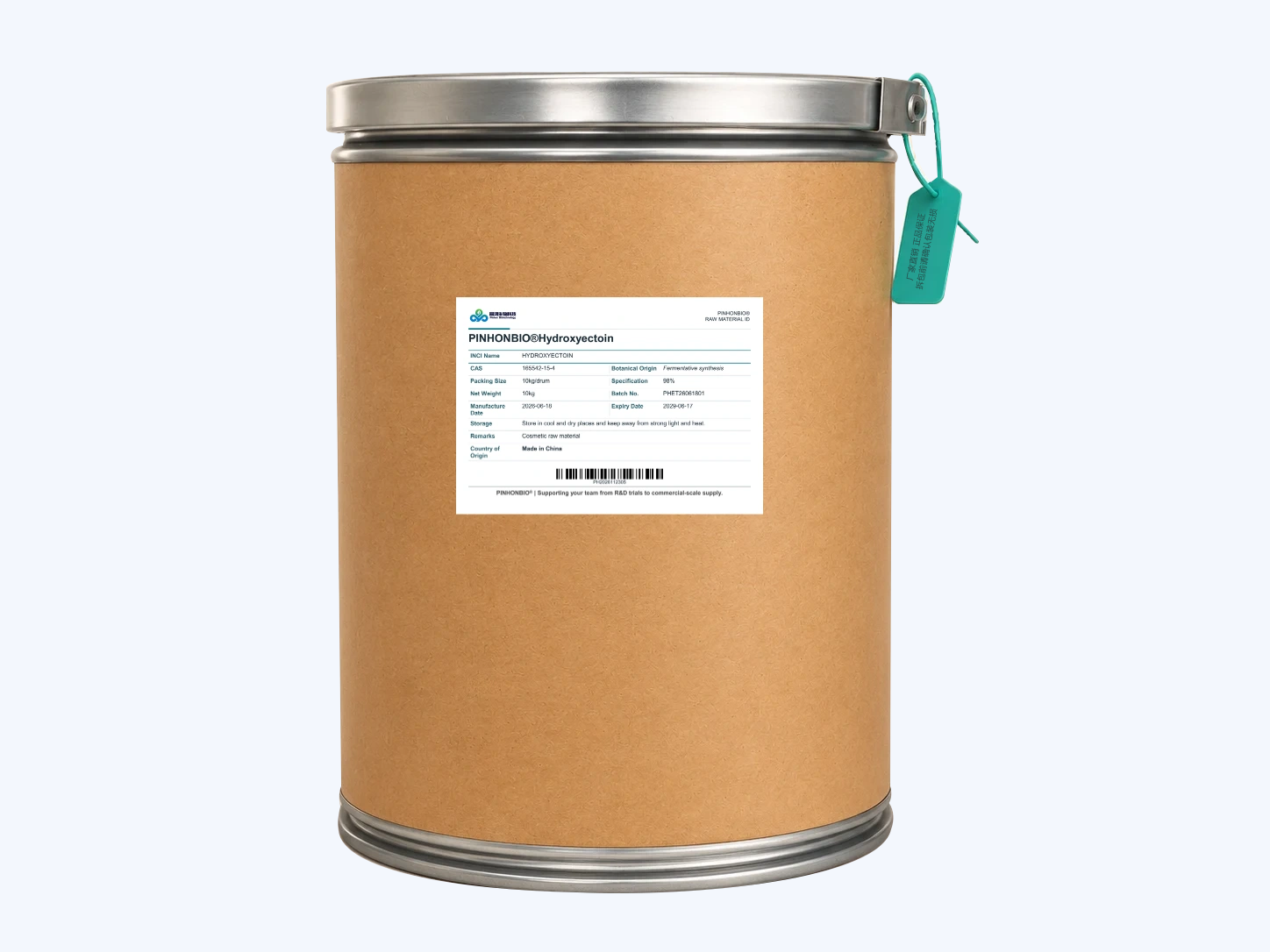
The 10 kg pack uses a round fibre drum. Check the security tag on the locking ring and the batch code on the label.
 Tamper-evident authenticity sealBatch traceability code
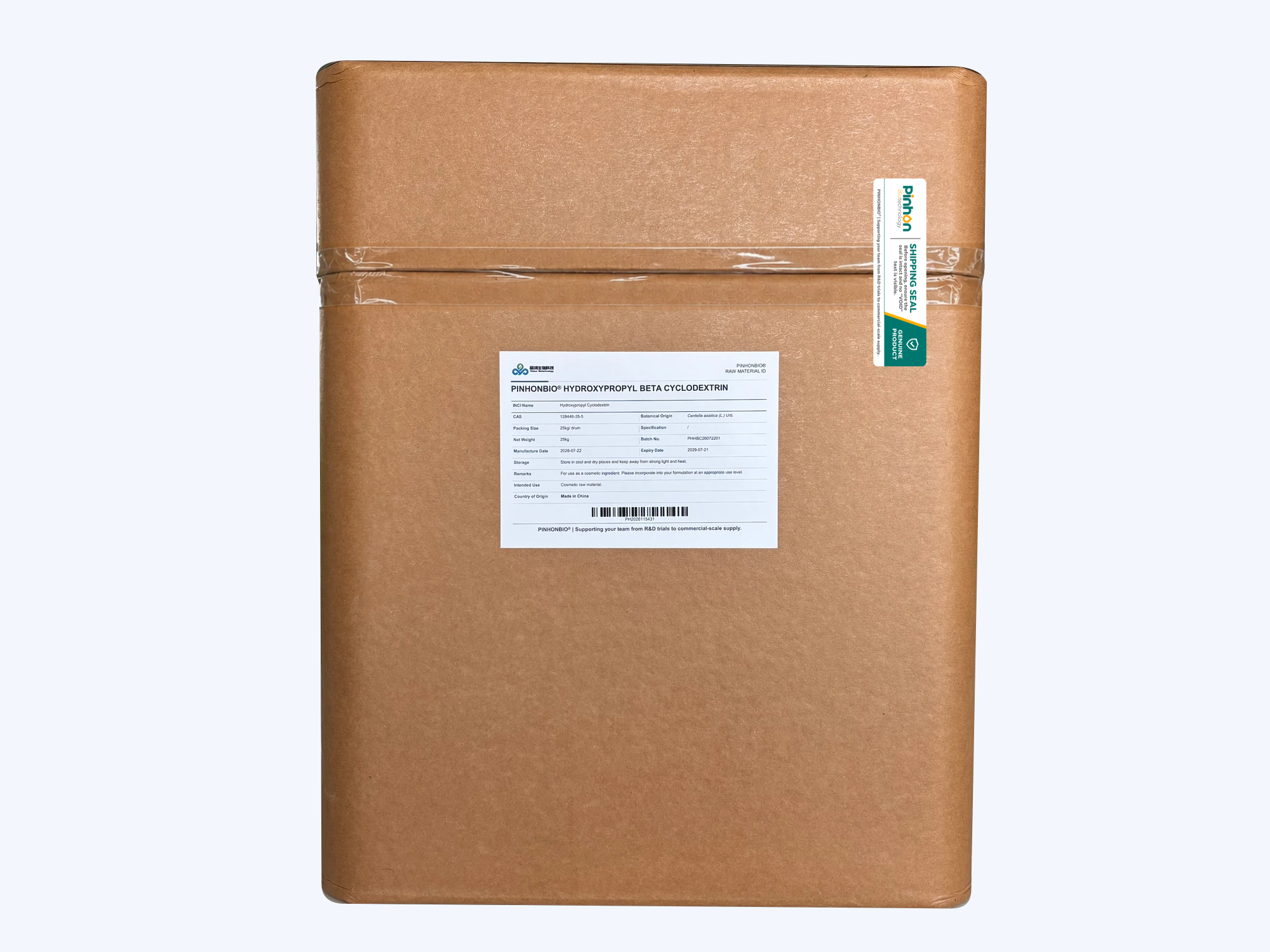
38 × 38 × 45 cm. A 3 × 10 cm tamper-evident seal bridges the taped lid seam.
The sample quantity is confirmed for each request.
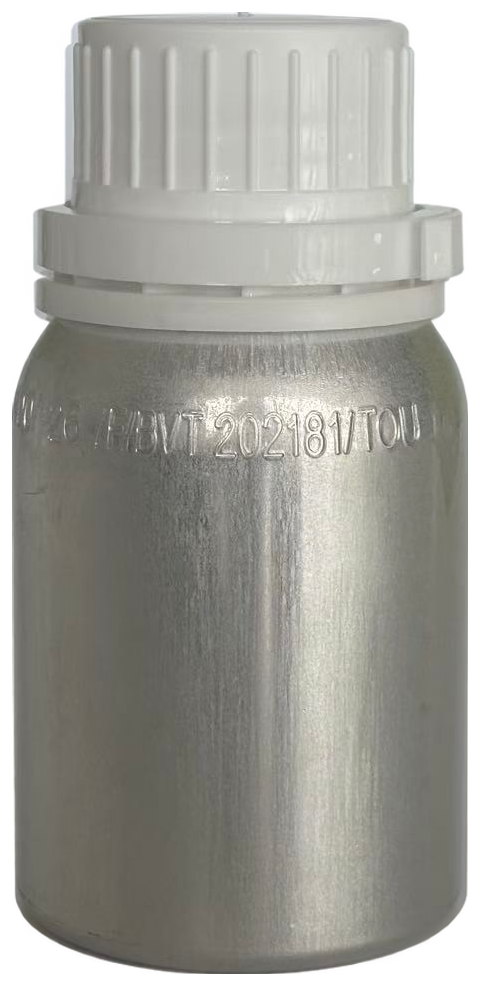 Tamper-evident ring
Bottle capacity: 50 mL. Check that the tamper-evident ring below the screw cap is intact before opening.
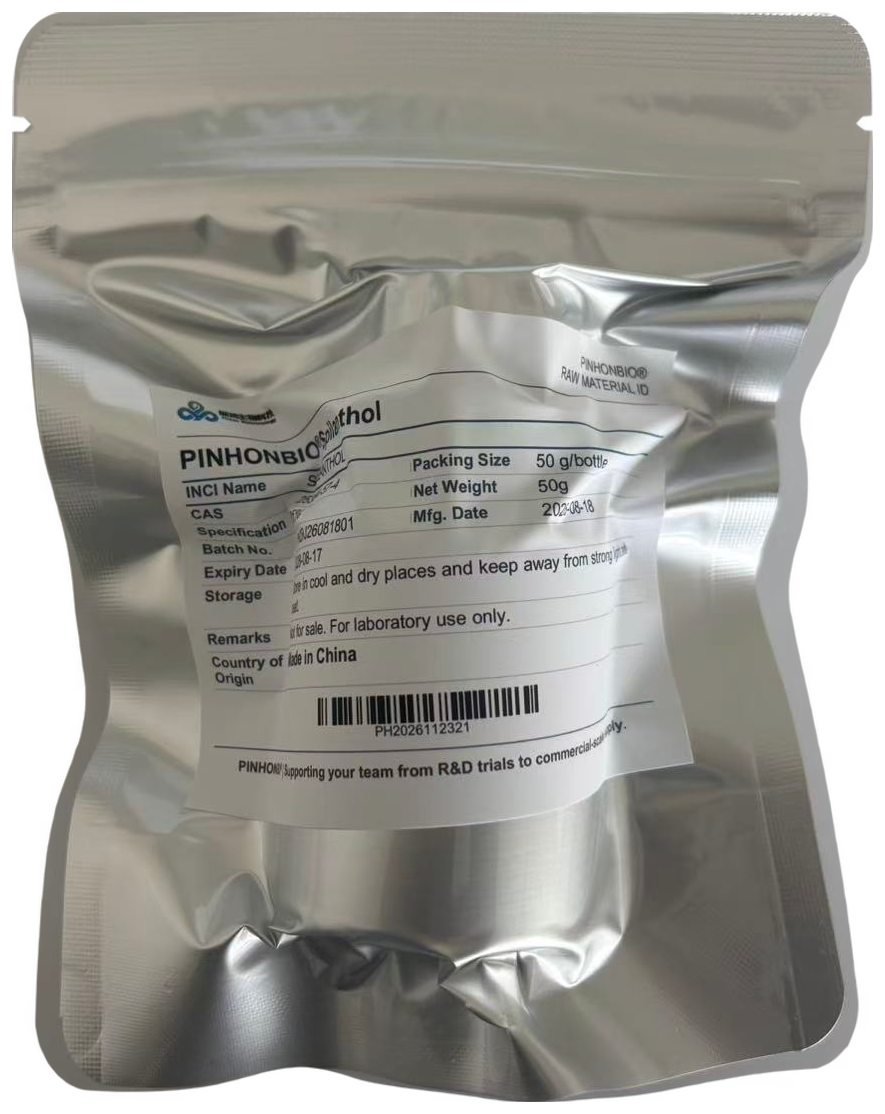 Traceability code
The bottle is vacuum-sealed inside an aluminum foil pouch. Keep the traceability code on the pouch label for sample enquiries.
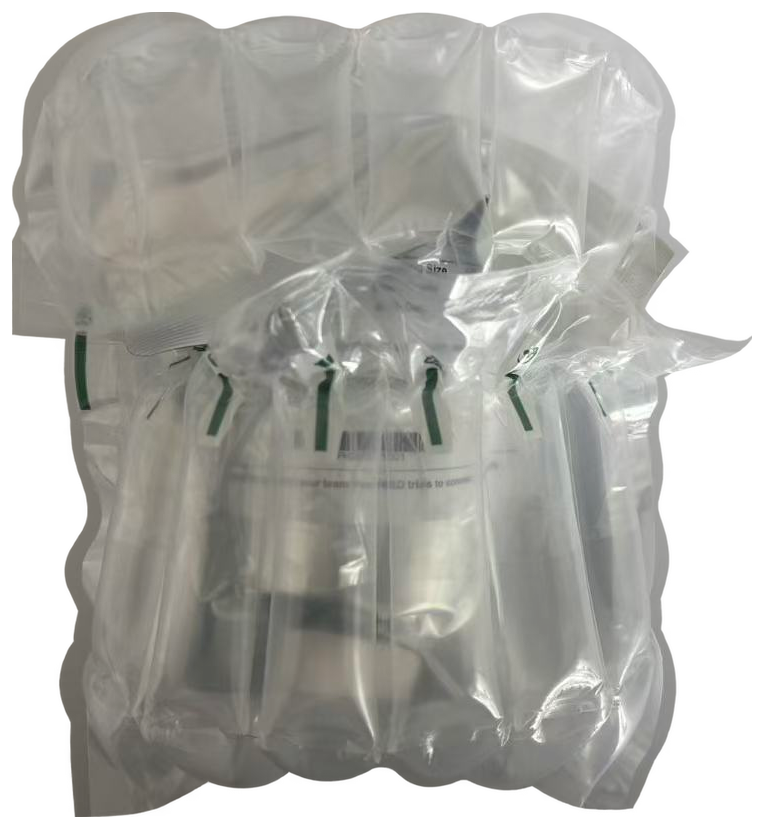 Air column
Inflated columns surround the sealed pouch to cushion the bottle against knocks and drops.
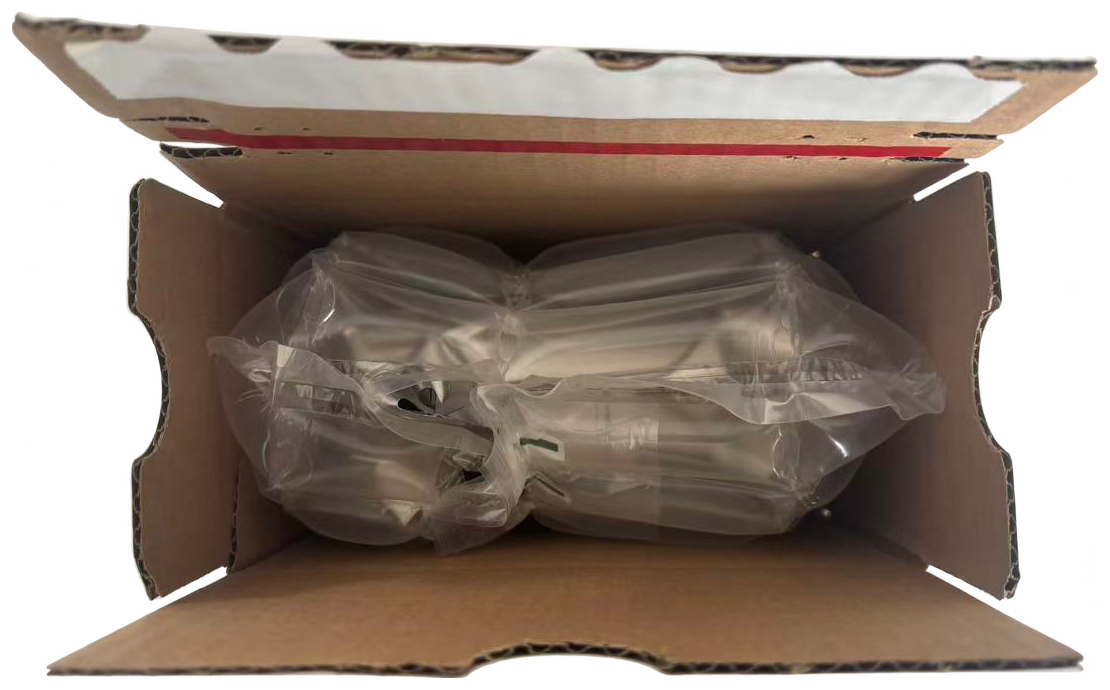 Shipping carton
The cushioned bottle sits inside the carton for transport.
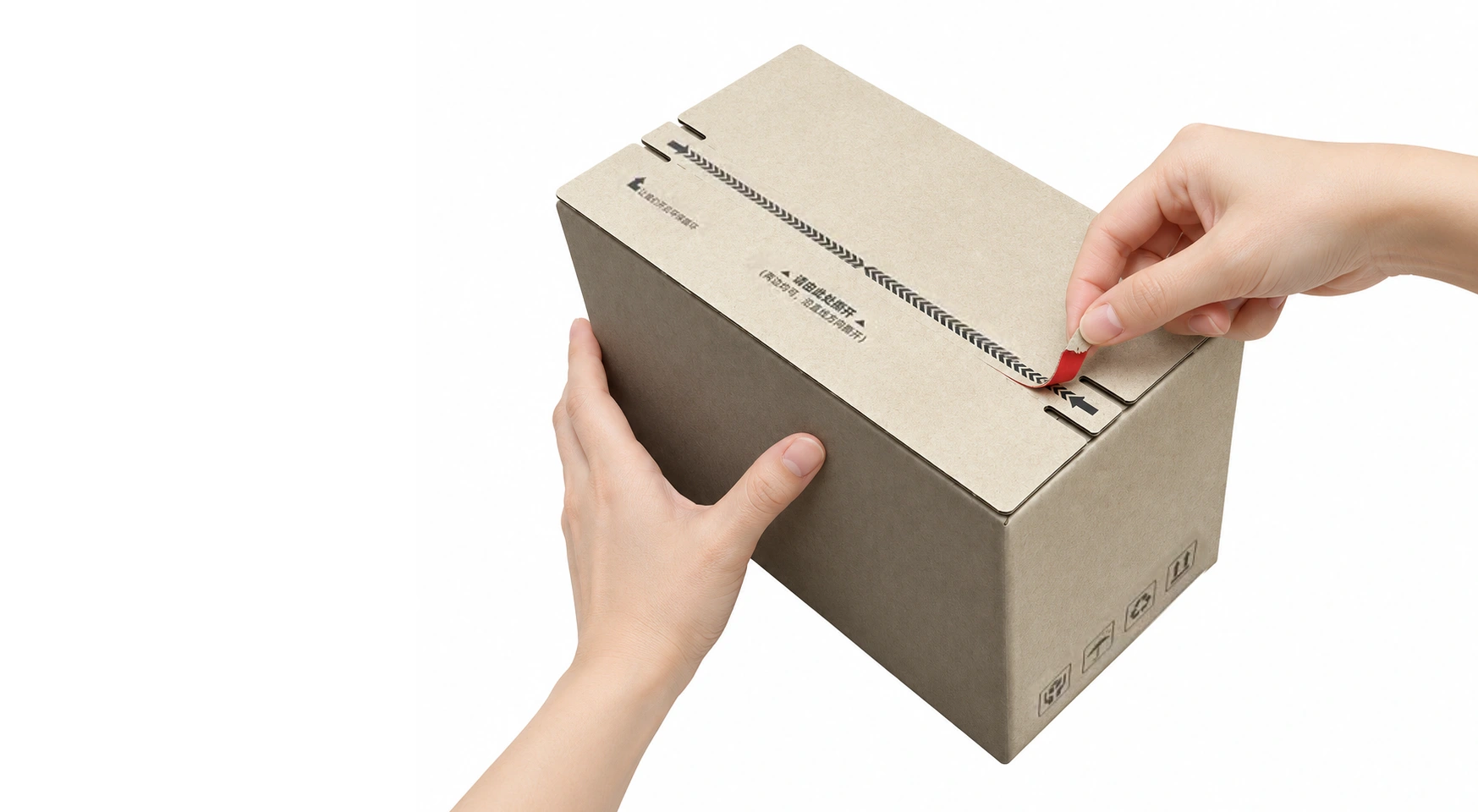 Tear strip
Check the shipping seal, then pull the tear strip across the lid to open the carton.
PH-XPNS 003 covers two Spilanthol specifications: 5% and 10%. Match the selected grade to its own material documentation; the 5% grade data do not establish the properties of the 10% grade.
It describes the Spilanthol marker content of the supplied Acmella Oleracea Extract, measured by HPLC. It is a raw-material specification, not a finished-product efficacy result.
These names occur in commercial inquiries. Confirm the botanical identity, supplied composition and marker assay against the current specification rather than assuming that similarly named preparations are interchangeable.
No. It is the raw-material addition level of the 5% extract in the supplied eye cream reference. The nominal 0.10–0.25% Spilanthol calculation applies only under that stated assumption. Validate a use level for each complete formula.
The eye cream reference does not define a use level for the 10% grade or high-purity Spilanthol.
Both the 5% and 10% Spilanthol extracts are available in two carrier preparations: DMI (Dimethyl Isosorbide) and GTCC/MCT (Caprylic/Capric Triglyceride). Choose the preparation that fits your solvent or oil phase, then check dilution, clarity and separation in the complete formula. The 10% extract and high-purity Spilanthol require their own handling data.
No. It identifies the Spilanthol marker. Use the botanical preparation’s complete identity and ingredient declaration for your purchasing and product files.
No. The public files below cover the 5% Spilanthol preparations in DMI and in GTCC/MCT. Those files do not establish the composition or handling of the 10% grade. For a 10% requirement, select that grade and request its matching documents before evaluation. View the two 5% preparations · Request matching 10% grade documents
Select 5% or 10% Spilanthol when requesting documents, samples or a quotation. For either specification, specify DMI or GTCC/MCT in the target-grade field.
PH-XPNS 005
PH-XPNS 006
PH-XPNS 001
PH-XPNS 002